How it works
Inspire deeper thinking about justice, rights, and responsibility.
Common Law Press brings real-world law to real people.
Our goal is to democratize legal literacy by providing high-quality, accurate, and thought-provoking resources on American law and justice.
American Law I: Foundations of American Law
This two part course provides two full years of exposure to American legal concepts. The content progresses from constitutional foundations and the foundations of criminal procedure in year one to private disputes and the limits of governmental power in the second year.
The course includes two semester long units per year, each designed to stand on its own while remaining fully integrated, building a cohesive understanding of American law when used together. Each unit is one half credit and covers nine or more in depth legal concepts.
The course was designed to be accessible to serious high school students, but scaffolded to make complex legal principles accessible. More detailed information can be found in the course samples.
Year 1, Semester 1:
Constitutional Structure, Judicial Power & Standing
This unit introduces the constitutional foundations of the American legal system—separation of powers, federalism, and the structure of Articles I–III—while guiding students through judicial review, standing, justiciability, and personal jurisdiction. Through landmark cases, Federalist Paper excerpts, and a mini moot court exercise, students practice legal reasoning and have the option to complete a mini case brief.
Year 1, Semester II:
Rights, Due Process & Criminal Procedure
This unit introduces students to the foundations of criminal procedure by tracing the historical development of policing, explaining core evidentiary rules, and examining constitutional protections under the Fourth, Eighth, and Fourteenth Amendments. Through topics such as the exclusionary rule, hearsay, motions in limine, prosecutorial selection, and juvenile justice case studies, students explore how fairness, due process, and proportionality shape the modern justice system. Students have the option to draft a motion, and apply the principles they are learning through the lens of an anchor novel study.
Year 2, Semester I:
Torts, Property & Civil Liability
This unit examines how the law allocates fault, risk, and responsibility between individuals through core tort and contract principles. Students explore doctrines from nuisance to assumption of risk, eggshell skull, and joint liability, applying them to real-world scenarios involving injuries, accidents, property disputes, biotech property rights along with parody and privacy in modern intellectual property law.
This unit also contains a grounding novel to apply legal principles students have covered.
Year 2, Semester II:
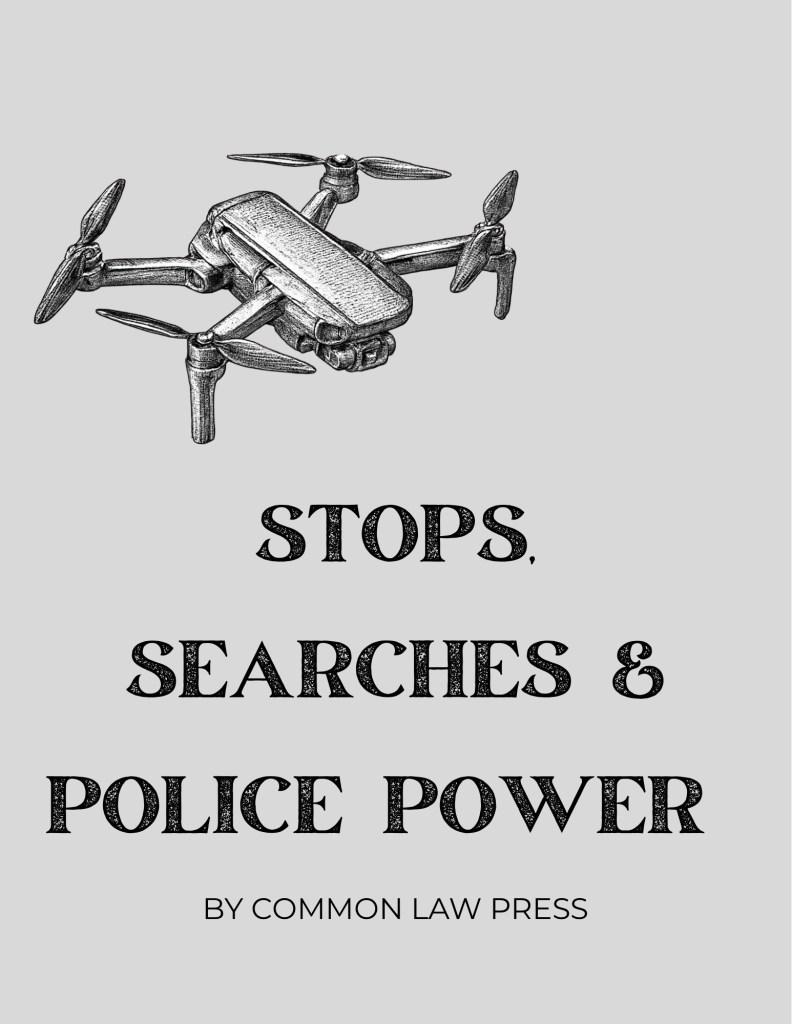
Stops, Searches & Police Power
This unit explores the constitutional boundaries of government power in the context of policing, with a focus on privacy, searches, and individual rights. Students examine how the Fourth Amendment regulates encounters between law enforcement and the public, including stops, searches, interrogation, and the use of force. Through case law and applied scenarios, students analyze how legal standards such as reasonable suspicion and probable cause operate in practice, and how technological advancements challenge traditional understandings of privacy. The unit emphasizes careful legal reasoning and the balance between public safety and constitutional protections.
What People Are Saying
Common Law Press empowers homeschoolers and co-ops with open-and-go law curriculum that builds critical thinking, civic awareness, and a deep understanding of how the legal system works.

“I liked how the course was structured, especially having the assignments organized in Google Classroom—it made everything easier to follow. The mini moot court was one of my favorite assignments. I enjoyed preparing for the oral argument and found it engaging. I especially liked witnessing other people’s arguments. Reading Just Mercy was also interesting, and it reminded me of To Kill a Mockingbird because of the way it explores justice and moral complexity. Overall, the course heightened my interest in juvenile justice. It also lead to my discovery of other books, like Push-out, and caused me to start thinking about pursuing pre-law in college.”
— 11th grade student
“As the homeschooling parent of two teens, I loved hearing the dynamic and thoughtful discussions that came out of their American Law class.
The reading selections were well-curated, high value and eye-opening. I learned a good deal along with my kids.
The class served as a catalyst, inviting the students to question and challenge the status quo while backing their argument with actual law and precedent.”
CD, Mother of 13 & 15 year old students
Quotation
Name, Title
Law Blog
Stay updated on breaking Supreme Court decisions and other relevant legal news.

